

Kyoto's Secret Morning Ritual: Autumn Magic Before Dawn
The Monk Who Changed My Mind About Kyoto
At 5:47 AM on a crisp October morning, I found myself questioning my sanity. Why was I trudging through the empty streets of Kyoto while the rest of the world slept? The answer came forty minutes later when I reached the Philosopher's Path, and the first rays of sunlight set the maple canopy ablaze in shades of crimson I'd never seen before.
This wasn't my first trip to Kyoto, but it was the first time I'd experienced the city's true soul—hidden in those precious hours before the tour buses arrive and the Instagram crowds descend.
The Magic Hour at Philosopher's Path
The Philosopher's Path (Tetsugaku-no-michi) transforms into something otherworldly before 7 AM. I started my walk at the northern end near Ginkaku-ji Temple, where fallen maple leaves created a natural red carpet along the stone pathway. The only sounds were my footsteps and the gentle babbling of the canal beside me.
Here's what made this experience unforgettable:
- Perfect solitude: No crowds, no noise—just you and ancient beauty
- Golden hour photography: The low morning light filters through the maple canopy like nature's own stained glass
- Wildlife encounters: I spotted a family of Japanese macaques playing in the trees—something impossible during busy hours
To reach this early morning paradise, take the Keihan Main Line to Demachiyanagi Station. The path entrance is a 10-minute walk northeast. Arrive by 6:30 AM for the best experience.
The Monk's Lesson at Kurama-dera
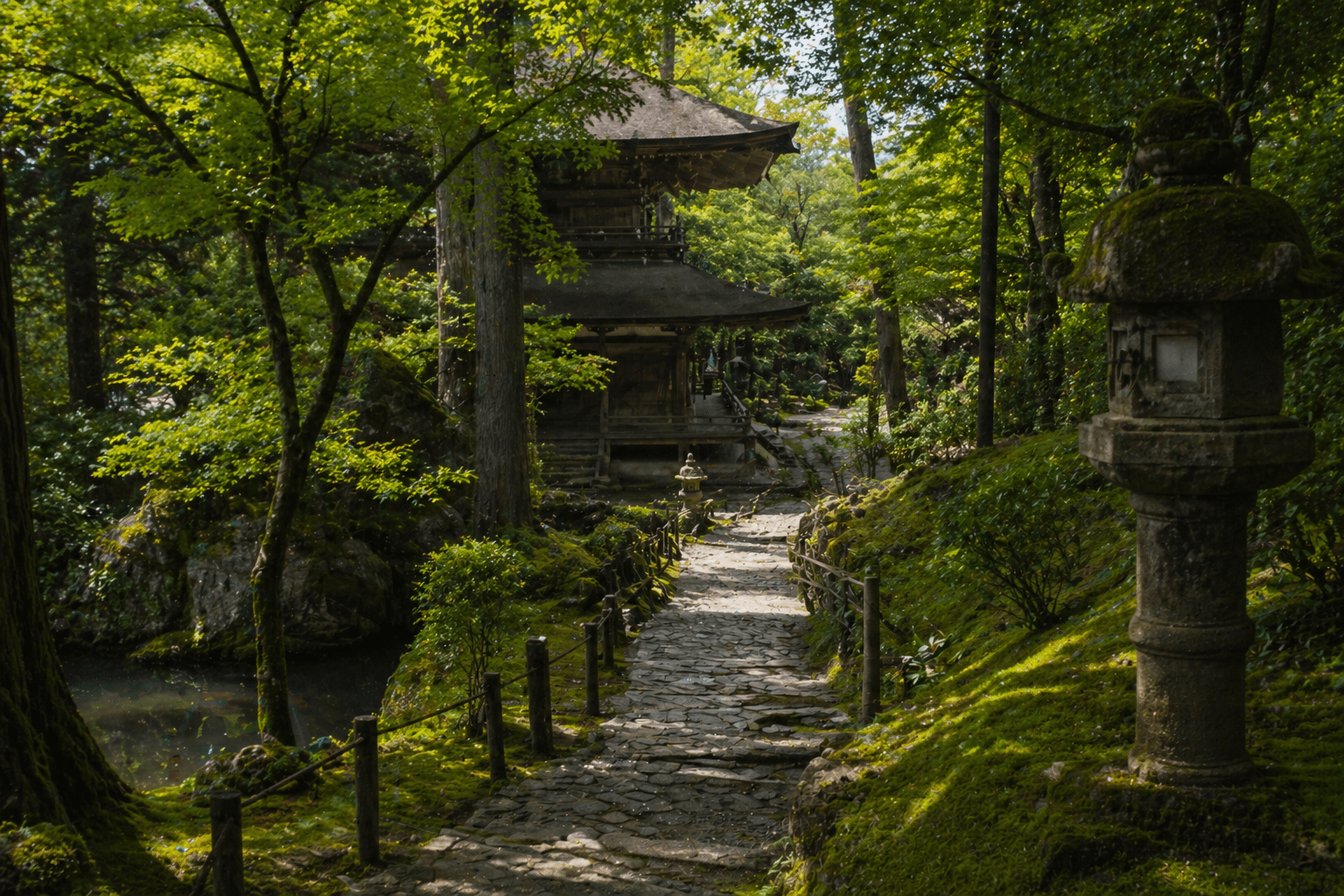
After my peaceful morning walk, I decided to venture into Kyoto's mountains for the Kurama-dera Temple hiking trail—a hidden gem that most visitors never discover. The 30-minute train ride on the Eizan Electric Railway through autumn forests felt like entering a fairy tale.
Halfway up the mountain trail, breathing heavily and questioning my hiking boots, I encountered an elderly monk sweeping fallen leaves from the temple steps. In broken English mixed with gestures, he invited me to sit and share his thermos of green tea.
"Tourist always rush," he said, pointing to his watch and shaking his head. "Mountain teach patience."
We sat in comfortable silence for twenty minutes, watching the mist rise from the valley below. He was right—I had been rushing, even in this supposedly peaceful place. That moment of stillness, surrounded by fiery maple trees and ancient temple buildings, became the highlight of my entire Japan trip.
How to Find Kurama-dera's Hidden Trail
From central Kyoto:
- Take Keihan Main Line to Demachiyanagi Station
- Transfer to Eizan Electric Railway (Eizan Densha)
- Ride to Kurama Station (30 minutes through stunning mountain scenery)
- Walk 30 minutes uphill to the temple, or take the cable car if you prefer
Pro tip: The trail connects to Kifune village via a 2-hour mountain hike. End your day at Kurama Onsen hot springs (¥2,500) for the perfect muscle-soothing finale.
Fushimi Inari's Secret: The Early Bird's Reward
Everyone knows about Fushimi Inari's famous thousand torii gates, but few experience them in their true glory. I arrived at 6 AM, just as the shrine opened, and had the entire mountain to myself for the first hour.
The vermillion gates seemed to glow against the autumn foliage, creating natural tunnels of color that photographs could never capture. More importantly, I could hear what tourists miss: the mountain's sounds. Birds calling, wind through bamboo groves, and the distant ring of temple bells.
Getting there early:
- Take JR Nara Line to Inari Station (5 minutes from Kyoto Station)
- Gates open at 6 AM year-round
- Bring a small flashlight for the summit trail before sunrise
- Allow 2-3 hours for the full mountain hike
The Tea Master's Gift in Gion
My final hidden experience came through pure serendipity. While wandering Gion district's back alleys (away from the main tourist strips), I noticed a tiny sign: "Tea ceremony - by appointment only." On impulse, I knocked.
The elderly tea master, Tanaka-san, spoke no English, but her daughter translated. They had a cancellation and invited me in for an authentic chanoyu ceremony in their 200-year-old machiya townhouse.
For 90 minutes, I learned the precise art of tea preparation while autumn light filtered through paper screens. The experience cost ¥8,000—expensive for a solo traveler's budget, but priceless for understanding Japanese cultural depth.
Finding authentic tea experiences:
- Walk the residential streets between Shirakawa and Kennin-ji Temple
- Look for small wooden signs in Japanese
- Book through your hotel concierge for legitimate experiences
- Expect to pay ¥5,000-¥10,000 for private ceremonies
The Real Kyoto Awaits
Kyoto's autumn magic isn't hidden in its famous temples—though they're beautiful. It lives in the spaces between tourist attractions, in the early morning hours, and in unexpected encounters with people who call this ancient city home.
The monk was right about patience. Sometimes the best travel experiences come not from checking boxes on an itinerary, but from slowing down enough to let a place reveal its secrets to you.
Next time you're in Kyoto, set that alarm for 5:30 AM. Trust me—the city you'll discover in those quiet morning hours is worth losing a little sleep.
Comments (0)
Related Stories
Hidden Kyoto: A Local's Guide to Temples Without the Crowds

Chasing Autumn Fire: A Love Letter to Kyoto's Sacred Maples
