

Chasing Autumn Fire: A Love Letter to Kyoto's Sacred Maples
Chasing Autumn Fire: A Love Letter to Kyoto's Sacred Maples
There's a moment each November when Kyoto transforms into something almost mythical—when the ancient maples ignite in shades of fire and gold, and every temple becomes a living painting. I've witnessed this metamorphosis three times now, and each visit feels like falling in love all over again.
The Sacred Dance of Momiji Season
My first encounter with Kyoto's autumn magic happened quite by accident. I'd arrived in late October, expecting pleasant weather and moderate crowds. What I discovered was nature's most spectacular performance, one that has drawn pilgrims and poets for over a thousand years.
Kiyomizu-dera became my first temple obsession. Perched on wooden stilts overlooking the city, this UNESCO World Heritage site offers views that literally take your breath away during peak momiji (maple viewing) season. I learned to arrive at 6 AM, when the temple opens, to witness the morning light filtering through crimson leaves without the afternoon crowds.
Pro tip: Purchase the special evening illumination tickets in advance—they sell out quickly, but watching the maples glow under spotlights is pure poetry.
Tofuku-ji Temple proved even more dramatic. Walking through its Tsuten Bridge, suspended above a valley of 2,000 maple trees, felt like floating through a sea of fire. The temple's head monk once told me that autumn visitors often weep at this sight—not from sadness, but from overwhelming beauty.
A Tea Ceremony That Changed Everything
In the historic Gion district, between temple visits, I stumbled upon a traditional tea house tucked behind bamboo screens. The elderly tea master, Tanaka-san, invited me to participate in a proper tea ceremony—my first.
As she gracefully whisked the matcha, autumn light streaming through paper windows, she shared something profound: "The tea ceremony teaches us ichigo ichie—one time, one meeting. Each moment with the maples is the same—it will never exist exactly this way again."
That philosophy transformed how I approached the rest of my Kyoto journey. Instead of rushing between famous spots, I began to truly see each maple leaf, each temple gate, each fleeting interaction.
Practical note: Many Gion tea houses welcome visitors, but book ahead during autumn season. Expect to pay 3,000-5,000 yen for an authentic experience.
Dawn in the Bamboo Cathedral
No Kyoto guide is complete without mentioning Arashiyama's Bamboo Grove, but here's what most visitors miss: the magic happens at sunrise. I dragged myself out of bed at 5:30 AM to catch the first train, arriving as golden light filtered through towering bamboo stalks.
The grove was mine alone—just me, the whispering bamboo, and that ethereal green light that photographers dream about. By 9 AM, tour groups would transform this sacred space into a selfie battleground. But in those early moments, I understood why ancient Japanese poets wrote about bamboo groves as gateways to enlightenment.
Hidden Gems Beyond the Crowds
Two discoveries changed my relationship with Kyoto forever:
Kurama-dera Temple: The Mountain Path Less Traveled
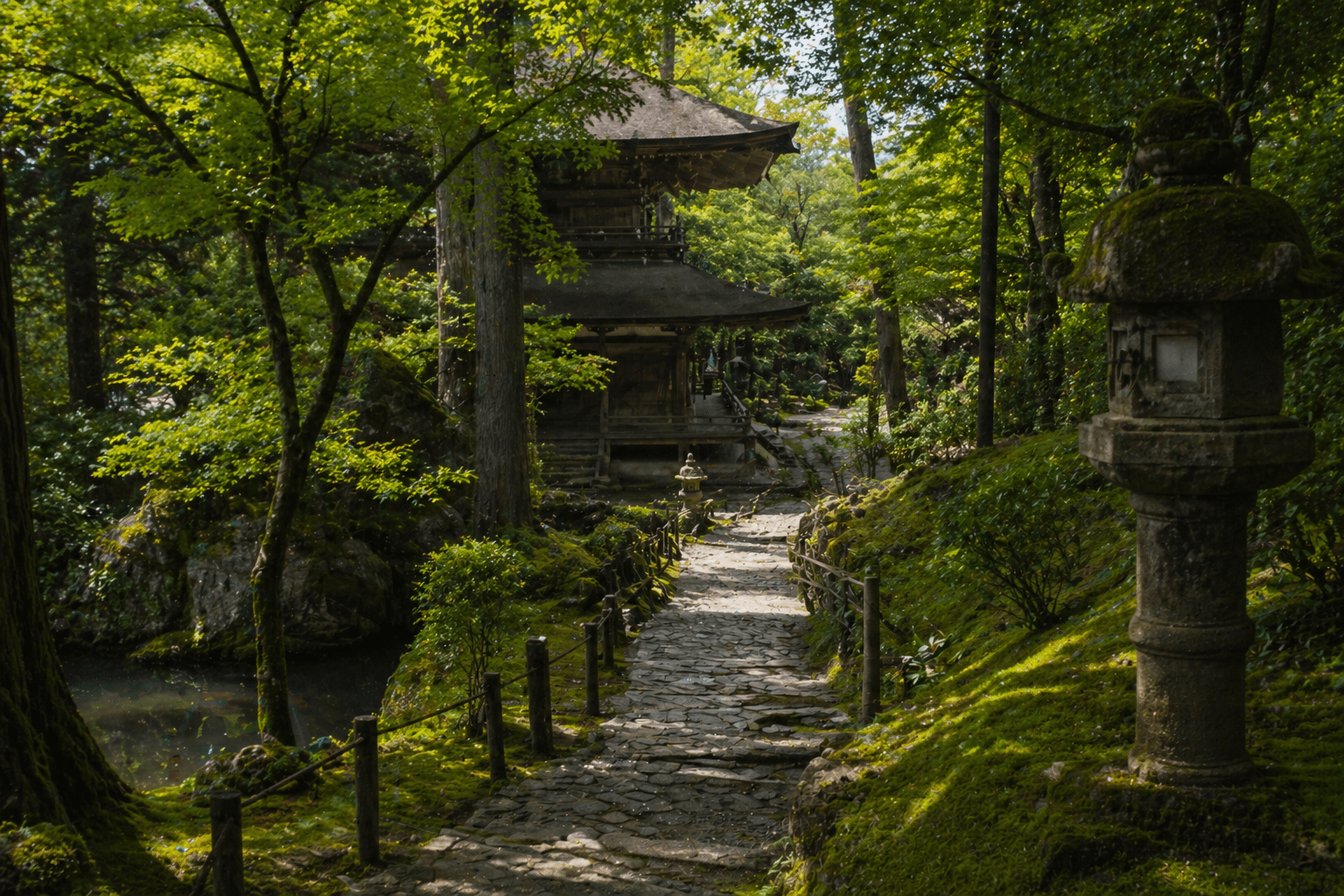
Instead of taking the cable car, I hiked the ancient mountain trail to Kurama-dera. The 30-minute climb through dense forest, following stone lanterns and wooden markers, felt like a pilgrimage. Autumn maples dotted the path like natural shrines.
At the summit, I found myself virtually alone with panoramic views of Kyoto's northern mountains, all ablaze in autumn colors. The temple's main hall, rebuilt after a fire in 1971, seemed to float among the trees.
Trail tip: Wear proper hiking shoes and carry water. The path can be steep and slippery with fallen leaves.
Ohara Village: Where Time Stands Still
My greatest discovery was Ohara village, just an hour north of central Kyoto. This rural hamlet, surrounded by rice paddies and traditional farmhouses, offers autumn scenery without a single tour bus in sight.
I spent an afternoon photographing century-old maples reflected in irrigation canals, chatting with farmers harvesting late-season vegetables. An elderly woman named Kimura-san invited me into her home for homemade mochi and green tea, sharing stories of how the village looked decades ago.
"The maples remember everything," she said, pointing to a massive tree beside her house. "They've watched our families grow for five generations."
Navigating Kyoto's Autumn Rush
Here's the reality: Kyoto's autumn popularity has exploded. But smart timing and local knowledge can still deliver magical experiences:
• Visit weekdays if possible—weekends bring crushing crowds • Start early: Most temples open at 6 AM; golden hour photography is yours alone • Book accommodations months ahead—I learned this the hard way • Consider late November to early December for fewer crowds and equally stunning colors • Use local trains instead of tourist buses for authentic neighborhood discoveries
The Deepest Lesson
As I sat in Philosopher's Path on my final evening, watching maple leaves drift into the stone canal, I realized Kyoto had taught me something profound about travel—and life. The most beautiful moments often happen in quiet spaces, early mornings, and unexpected conversations.
Yes, you'll want those iconic temple photos. But save time for wandering unnamed alleys, accepting invitations from strangers, and simply sitting still long enough to watch a single maple leaf complete its journey from branch to ground.
That's when Kyoto reveals its deepest magic—not in the famous temples alone, but in the spaces between, where ancient wisdom whispers through autumn wind and every moment becomes a meditation on impermanence and beauty.
The maples are calling. Will you answer?
Comments (0)
Related Stories
Hidden Kyoto: A Local's Guide to Temples Without the Crowds

