

Kyoto's Secret Autumn: A Local's Guide to Hidden Fall Colors
Kyoto's Secret Autumn: A Local's Guide to Hidden Fall Colors
The morning mist clung to the bamboo like a whispered secret as Takeshi-san led me through the narrow path in Arashiyama. At 5:30 AM, we were the only souls in what would later become a sea of selfie sticks and tour groups. "This is when the bamboo speaks," he said softly, his breath visible in the crisp October air. "Listen."
I met Takeshi three days earlier at a tiny izakaya tucked behind Kyoto Station, where the locals go when they want to escape the tourist trail. A retired temple gardener with hands weathered by decades of tending to sacred grounds, he offered to show me the Kyoto that guidebooks miss—the city painted in autumn's most spectacular palette, minus the crowds.
The Magic Hour at Fushimi Inari
Our first stop was Fushimi Inari at golden hour, but not where you think. While everyone flocks to the famous thousand torii gates, Takeshi guided me to a lesser-known trail that winds behind the main shrine. Here, ancient maple trees create a canopy of fire-red leaves that filter the late afternoon light into something almost ethereal.
"The foxes come out here," he whispered, pointing to small stone statues nestled between the roots. "Local belief says they carry messages to Inari, the rice deity. In autumn, when the harvest is complete, they're especially active."
We climbed higher, past scattered tourists, until the path narrowed to barely shoulder-width. The reward? A small clearing where a single enormous maple tree stood like a crimson cathedral, its leaves so vivid they seemed to glow from within.
Insider tip: Visit Fushimi Inari between 4-6 PM in late October. The crowds thin out, and the western light transforms the vermillion torii into something magical.
Tea Ceremony in Gion's Hidden Heart
The next morning, Takeshi arranged something special—a private tea ceremony with Kimura-san, a master who's been practicing the art for forty years in a machiya (traditional wooden townhouse) tucked deep in Gion's backstreets.
The ceremony took place in a six-tatami room overlooking a pocket garden where a single maple tree dropped golden leaves onto moss-covered stones. As Kimura-san prepared the matcha with movements refined by decades of practice, she shared stories of old Kyoto—how her grandmother used to collect fallen maple leaves to press between silk kimonos, believing they brought good fortune.
"In autumn," she said, whisking the tea to a perfect froth, "we practice mono no aware—the bittersweet awareness of the impermanence of things. The leaves are most beautiful just before they fall."
The bitter tea and sweet wagashi (traditional confection shaped like a maple leaf) created a perfect harmony, while outside, a real geisha hurried past, her wooden geta clicking on wet stones.
The Secret Mountain Temple
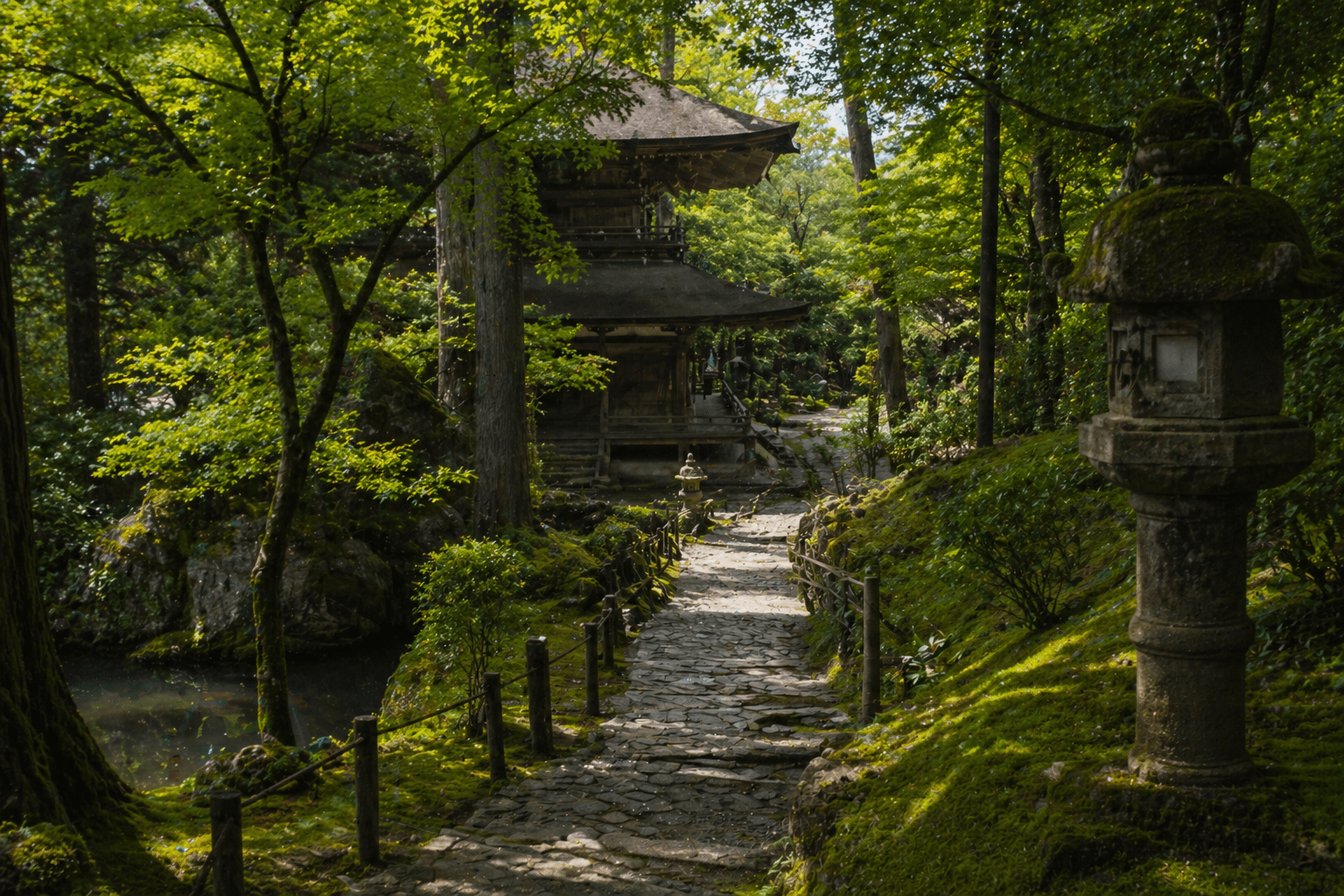
But Takeshi's greatest gift was introducing me to Kurama-dera, accessible only by a challenging mountain hike that keeps the tour buses at bay. We started early, following an ancient pilgrimage route through dense forest where the only sounds were our footsteps on fallen leaves and the distant call of mountain birds.
The trail winds steeply upward for about 90 minutes, past hidden waterfalls and moss-covered Buddha statues that seem to emerge from the forest itself. Halfway up, we met an elderly monk sweeping leaves from a small shrine, who bowed deeply and offered us persimmons from a tree growing wild nearby.
"This path has been walked for over 1,000 years," Takeshi explained as we climbed. "Pilgrims, merchants, monks—all seeking something sacred at the summit."
The temple itself, perched on the mountainside, offers panoramic views of Kyoto's northern mountains draped in autumn colors. But more than the view, it's the profound silence here—broken only by temple bells carried on mountain wind—that makes the climb worthwhile.
Daigo-ji's Secret Illumination
Our final adventure took us to Daigo-ji temple for their lesser-known autumn illumination. While most tourists flock to the famous Arashiyama light-up, Daigo-ji's evening display feels intimate, almost private. The temple's five-story pagoda, reflected in a mirror-like pond surrounded by illuminated maples, creates a scene so perfect it feels like a dream.
Takeshi and I sat on a wooden bench, sharing hot amazake (sweet rice drink) from a thermos, watching the colors shift as clouds passed over the moon. "This is why I never left Kyoto," he said quietly. "Every season, she shows you something new, something that makes you fall in love all over again."
Practical Magic
These hidden autumn experiences taught me that Kyoto's real magic lies not in checking famous sites off a list, but in slowing down, following local wisdom, and allowing the city's ancient rhythms to guide you. The secret isn't just knowing where to go—it's knowing when, and with whom.
As I prepared to leave, Takeshi pressed a small envelope into my hands. Inside was a pressed maple leaf from that first morning in Arashiyama, along with his phone number. "For next time," he said with a smile. "Spring brings different secrets."
Sometimes the best travel guide isn't a book—it's a friend who knows which paths lead to wonder.
Comments (0)
Related Stories
Hidden Kyoto: A Local's Guide to Temples Without the Crowds

Chasing Autumn Fire: A Love Letter to Kyoto's Sacred Maples
